
The Universal Law of Life: Reiki, Resonance, and the Science of Wholeness
- carriek30
- Oct 27, 2025
- 3 min read

“True law is right reason in agreement with nature.” — Cicero
Across time, philosophers and scientists have sought to understand the invisible order that governs life. Today, as quantum physics explores the fabric of reality and energy medicine redefines healing, Cicero’s ancient wisdom finds new resonance. Reiki — the Japanese art of channeling universal life energy — offers a living example of this harmony, bridging the language of science with the essence of spirit.
The Quantum Field and the Nature of Energy Healing
Modern physics describes the universe not as a collection of separate objects, but as a vast field of energy and information. Every particle, every cell, every thought vibrates within this interconnected web.
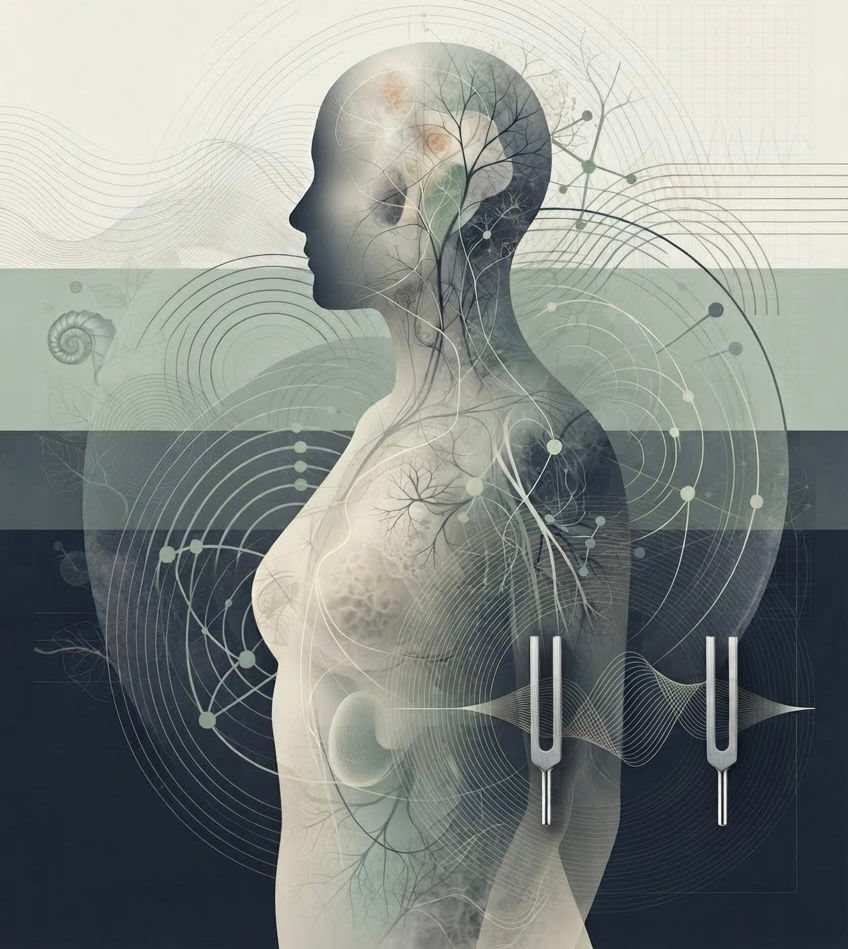
Reiki operates within this same field. Practitioners align themselves to subtle frequencies that resonate with the body’s natural energy systems, restoring balance and coherence. From a quantum perspective, this may reflect the principle of resonance — where systems in harmony amplify one another, promoting equilibrium and flow.
In this sense, Reiki is not “mystical” but deeply natural. It mirrors the self-organising intelligence of the universe itself — what Cicero called right reason in agreement with nature.
Consciousness as the Bridge Between Science and Spirit
The study of consciousness has become one of the most compelling frontiers in modern science. Neuroscience reveals the brain’s extraordinary plasticity, while quantum theory suggests that observation itself may influence reality.
Reiki invites us to experience this interplay directly. When practitioner and recipient enter a shared state of awareness, their brainwaves, heart rhythms, and energy fields begin to synchronise. This coherence reflects what researchers call heart-brain entrainment, a measurable phenomenon that parallels the intuitive harmony long described in spiritual traditions.
Here, consciousness is not confined to the mind — it is the connective tissue of existence.
Reiki as a Living Expression of Natural Law
Cicero’s notion of natural law speaks to an order inherent in all things — a law not imposed, but discovered through alignment with nature’s rhythm. Reiki embodies this principle through presence, intention, and surrender.
When energy flows freely, the body’s innate intelligence restores itself. When it is blocked, dissonance arises — physically, emotionally, or spiritually. The practice of Reiki, therefore, is a return to that original harmony. It is an act of remembering the wholeness that underlies all apparent fragmentation.
This is the universal law of life: coherence, balance, and unity.
The Science of Wholeness and the Future of Healing
As integrative medicine evolves, the boundaries between science and spirituality continue to dissolve. Research into biofields, quantum biology, and energy coherence increasingly supports what ancient healers have always known — that the human body is not a machine, but a symphony of frequencies.
Emerging studies suggest that practices like Reiki may influence the body’s electromagnetic field, reduce stress responses, and promote physiological balance. While the mechanisms remain under exploration, the outcomes point toward a holistic model of health — one that honors both measurable data and lived experience.
In this model, healing becomes less about intervention and more about resonance — aligning with the universal frequency of life itself.
Epilogue: The Remembering of Wholeness
In the stillness after a session, I often sit with my hands resting lightly over my heart, feeling the subtle pulse of Reiki moving through me. It is in these moments that I understand healing not as something given or received, but as something remembered — a return to the rhythm that has always been there.
Reiki has taught me that to heal is to listen — not only to the body, but to the silence beneath it, where energy and awareness meet. Science gives language to the patterns, spirituality gives meaning to the experience, and together they form a single truth: that life, in all its complexity, seeks harmony through resonance.
And so, each time I place my hands in stillness, I am reminded that I am not separate from the field I serve. I am part of it — a luminous thread of consciousness, woven by the same intelligence that animates all things.
Note:Marcus Tullius Cicero (106–43 BCE) was a Roman statesman, orator, lawyer, and philosopher whose writings shaped Western thought on ethics, law, and civic duty. Trained in both Stoic and Academic Skeptic traditions, Cicero sought to translate Greek philosophy into Latin and make it accessible to Roman intellectual life.
After the fall of the Roman Republic and the death of his daughter Tullia, Cicero turned from politics to philosophy. His later works — including De Officiis, De Natura Deorum, and Tusculanae Disputationes — reflect a profound search for meaning, virtue, and tranquility amid personal and political turmoil.


Comments